
Quantum computing may have taken another step toward simpler and more efficient hardware.
Researchers at the Universidade Federal de São Carlos (UFSCar) in Brazil have proposed a new approach that could allow any single-qubit quantum gate to be performed using just one carefully designed electromagnetic pulse.
The work addresses an important challenge in quantum computing: controlling qubits accurately while keeping quantum operations as simple, fast, and reliable as possible.
Why Single-Qubit Gates Matter
A qubit is the basic unit of quantum information. Similar to how a classical computer uses bits, quantum computers use qubits to store and process information.
But a qubit is not limited to simply being 0 or 1. Through quantum mechanics, it can exist in a combination of states, and quantum gates are used to manipulate those states.
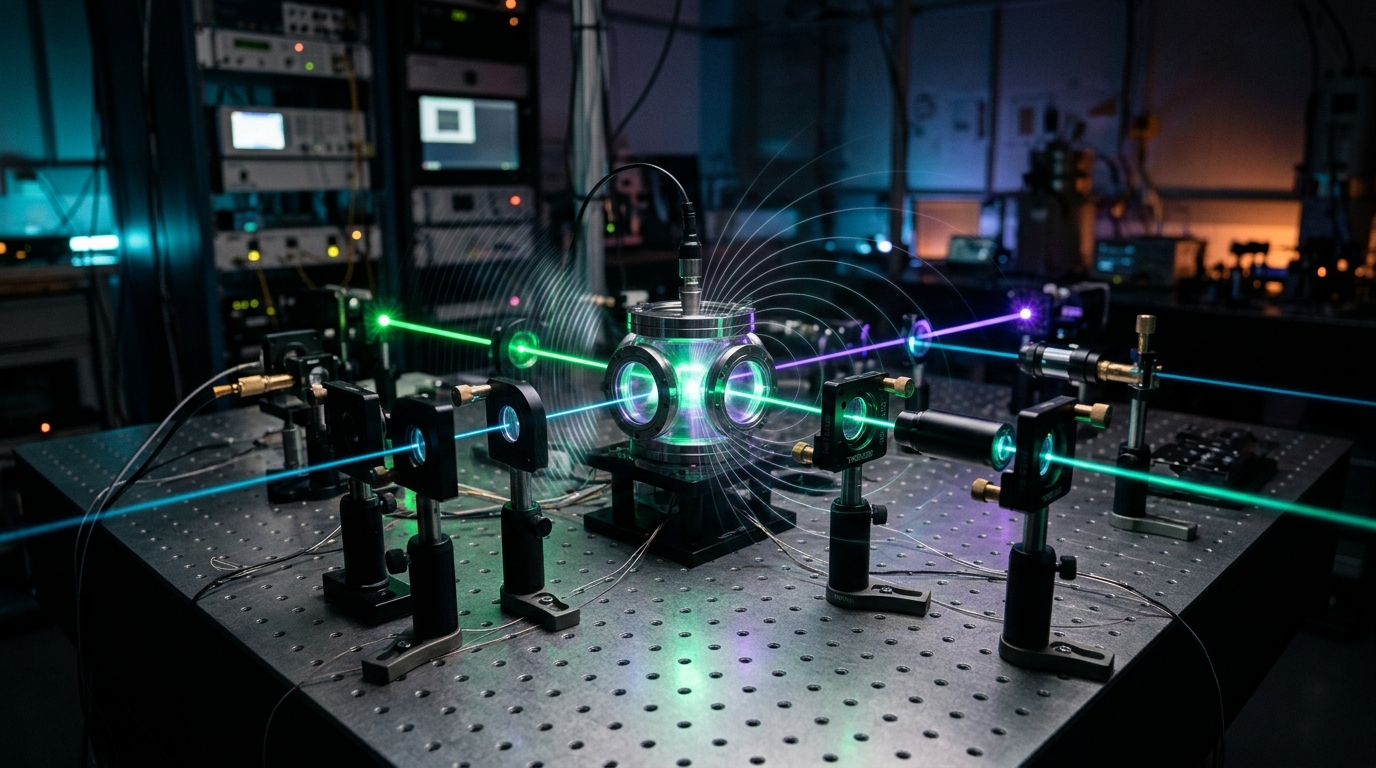
In practical quantum computers, controlling a qubit often involves carefully designed sequences of electromagnetic or microwave pulses. The more operations and pulses required, the more opportunities there are for errors, calibration problems, noise, and loss of quantum information.
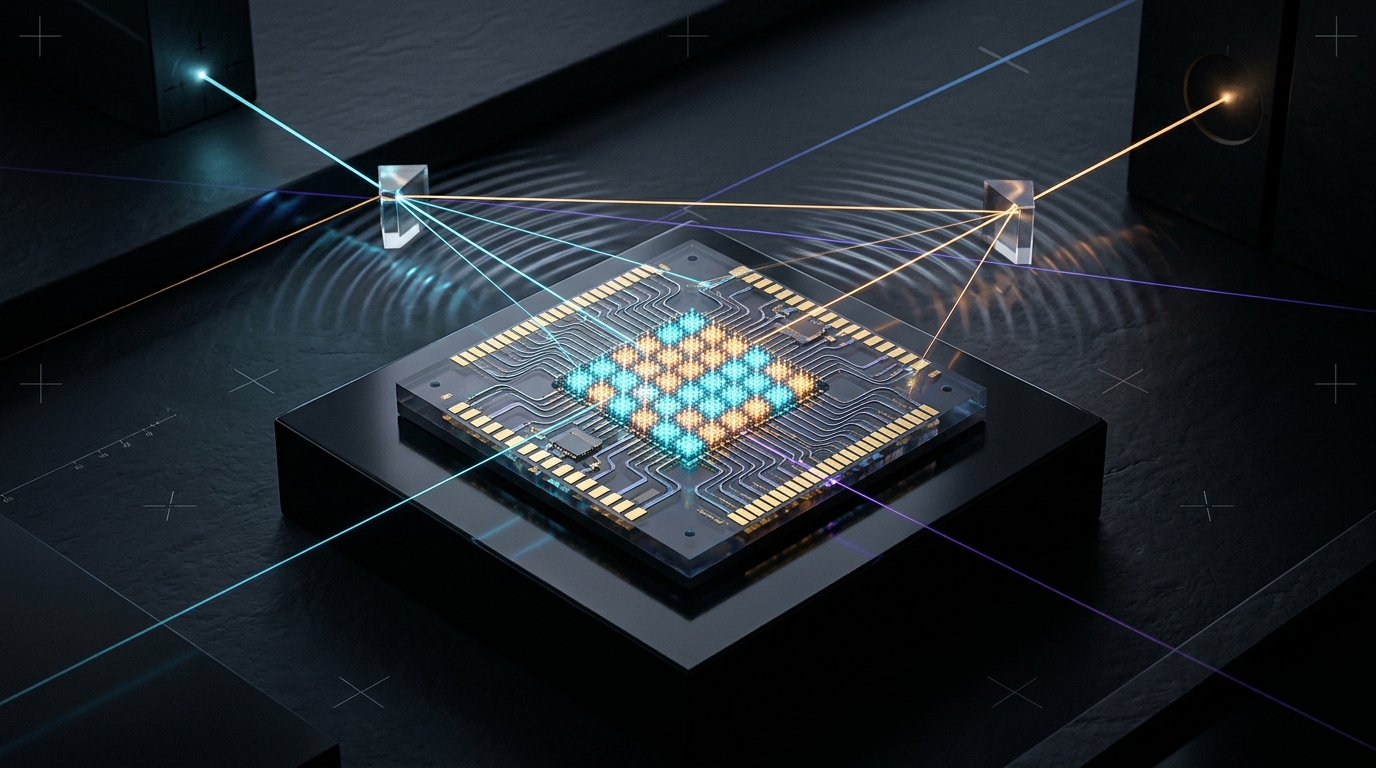
This is why researchers are constantly looking for better ways to control qubits. One Pulse Instead of a Sequence The UFSCar researchers have developed a mathematical framework showing that a single, appropriately shaped electromagnetic pulse can generate an arbitrary single-qubit gate. In simple terms, instead of breaking a desired operation into several smaller steps, the researchers describe how the control pulse itself can be designed to directly produce the required quantum transformation.
The approach uses analytical formulas rather than relying entirely on numerical optimization to discover a suitable pulse. This is an important distinction because analytical control can make the relationship between the desired quantum operation and the physical pulse easier to understand and potentially easier to implement.
The researchers use the mathematical framework of SU(2), which describes the possible transformations of a single qubit. That may sound complicated, but the basic idea is straightforward: If you know what operation you want to perform on a qubit, the method provides a way to construct the electromagnetic pulse needed to perform it.
Why Fewer Pulses Could Be Important
Reducing the number of pulses is not simply about making a quantum computer faster. Every physical operation introduces potential sources of error. Quantum systems are extremely sensitive to their surroundings. Small imperfections in pulse amplitude, timing, frequency, or phase can affect the final state of a qubit. A shorter and simpler control sequence could therefore offer several potential advantages:
- Fewer control operations
- Reduced opportunities for errors
- Simpler pulse calibration
- Potentially shorter gate operations
- Lower control complexity
- A possible path toward more scalable quantum hardware
These are especially important as researchers attempt to move from small experimental quantum systems toward larger and more practical quantum processors.
The Interesting Part: The Pulse Can Be Shaped
The key idea is not simply using “one pulse.” It is about engineering the shape of that pulse. The electromagnetic field can be described using functions that control characteristics such as its amplitude and phase over time. By choosing these functions appropriately, the researchers can construct a pulse capable of producing the desired single-qubit transformation.
This gives researchers flexibility. Instead of having one fixed pulse for one specific operation, the framework provides a general method for designing different pulses for different quantum gates. That could make the approach more adaptable to different quantum hardware platforms.
This Is Not Yet a Quantum Computer Breakthrough
It is important to put the result into perspective.
The research does not mean that quantum computers can now perform all operations with a single pulse, nor does it eliminate the many other challenges involved in building a useful quantum computer.
The work focuses on single-qubit gates. Quantum computers also need reliable two-qubit and multi-qubit operations, which are generally much more difficult because they require controlled interactions between qubits.
Quantum error correction, qubit connectivity, coherence, readout, fabrication, and hardware scalability remain major challenges. So this should be viewed as an improvement in the way one important class of quantum operations can be designed not as a complete solution to quantum computing.
Why This Research Matters
The importance of this work is that quantum computing is not only about increasing the number of qubits. The quality of control over those qubits is equally important. A quantum processor with thousands or millions of qubits would not be useful if those qubits cannot be manipulated accurately and efficiently.
Research like this explores ways to make the control layer simpler. If such techniques can eventually be translated into practical hardware, they could help reduce the complexity associated with controlling large numbers of qubits.
The Bigger Picture
Quantum computing will not become practical because of a single breakthrough. It will likely happen through hundreds of improvements across hardware, materials, control systems, algorithms, software, and error correction.
The ability to perform sophisticated single-qubit operations with simpler control is one of those improvements. And sometimes, making quantum computers more powerful may begin with making them simpler.
Source: The original news was published by Quantum Zeitgeist on August 16, 2026.