For decades, quantum computing has remained locked behind one major barrier: extreme cold. Traditional systems need temperatures colder than outer space just to function. That limitation is now being removed.
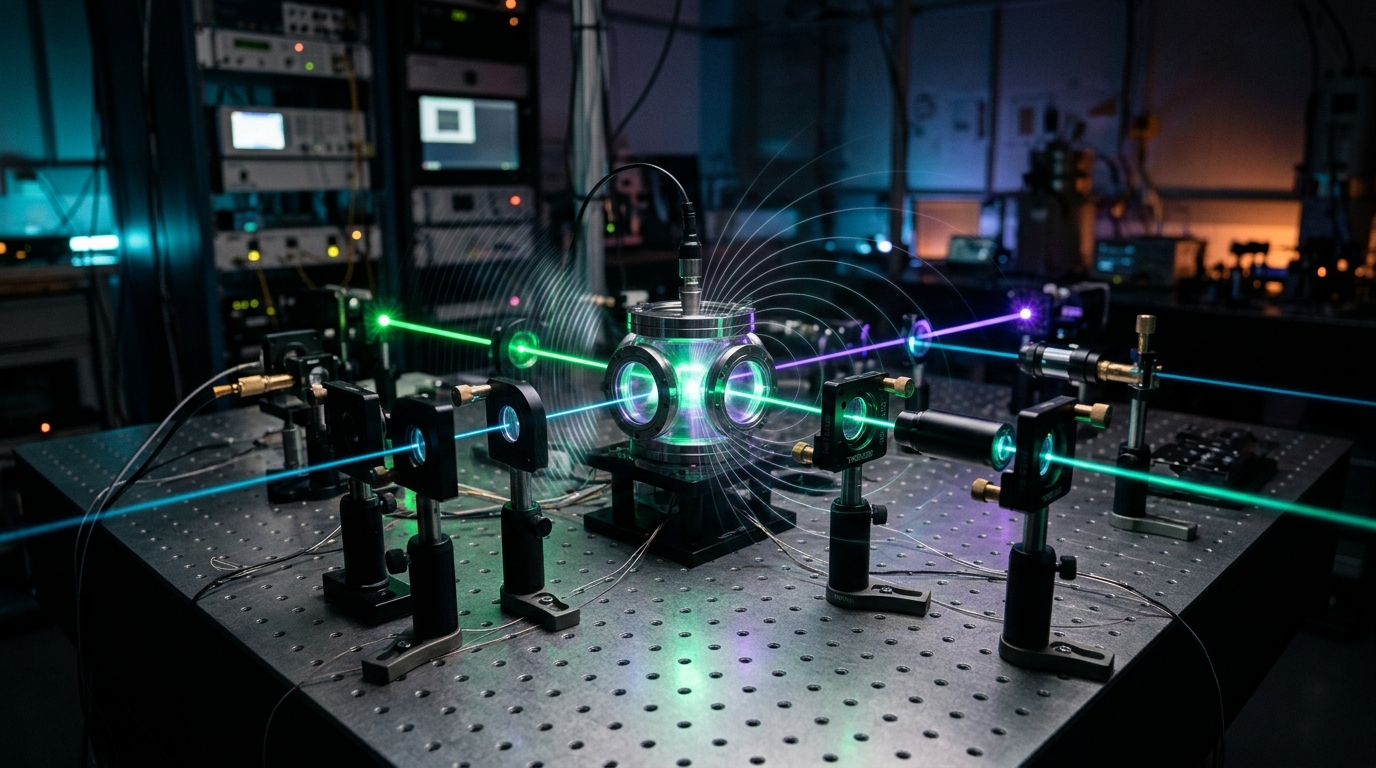
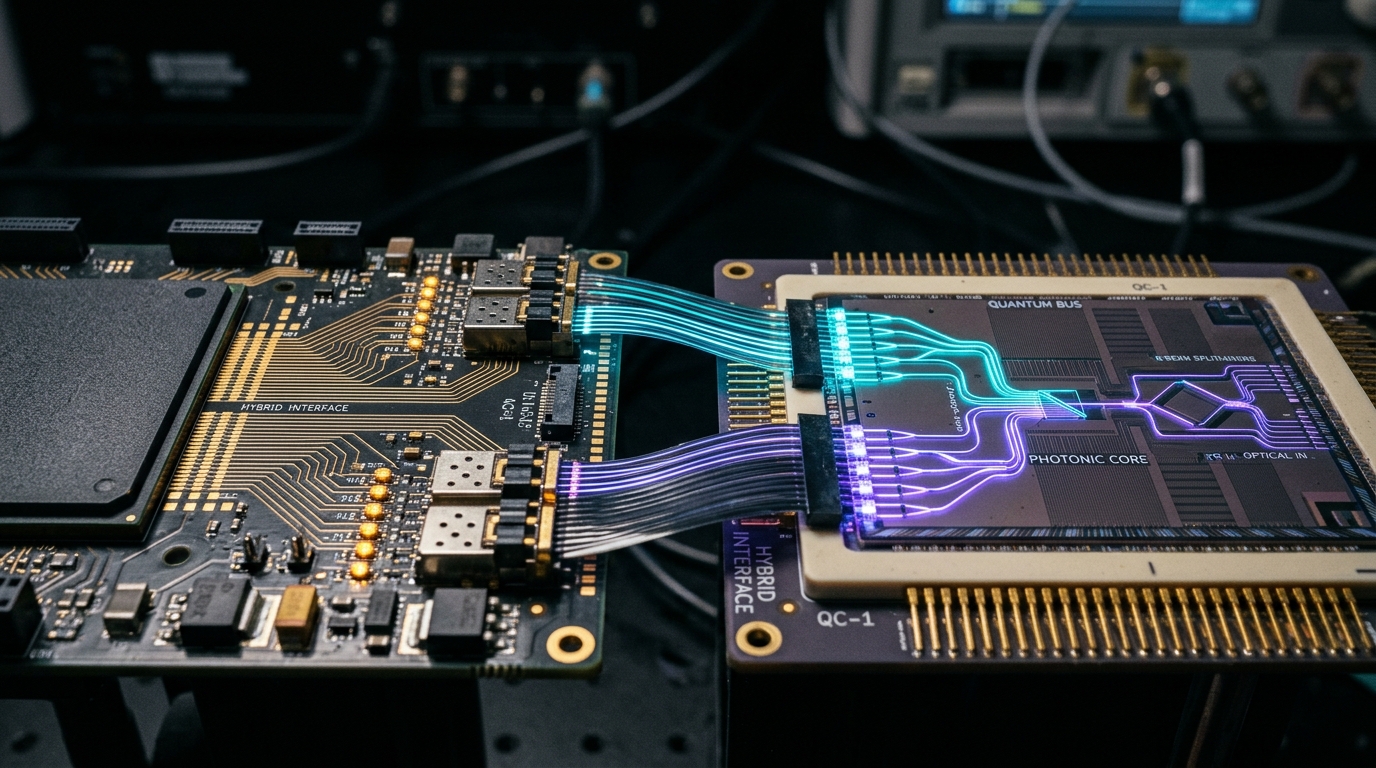
At OJANVU Quantum Labs, we have developed and demonstrated practical room-temperature quantum computing using continuous-variable photonic systems. Our technology operates at normal ambient temperatures between 20 and 40 degrees Celsius. It requires no cryogenics, fits into standard data center racks, and connects using ordinary telecommunication optical fiber.
This is practical quantum hardware designed for real-world use.
Why Room-Temperature Operation Changes Everything
Most quantum computers today rely on superconducting qubits that must be cooled to around 15 millikelvin. That requires large dilution refrigerators, complex support systems, high power consumption, and specialized facilities. As a result, quantum computing has stayed expensive, difficult to scale, and largely confined to research laboratories.
We chose a different path. Instead of trying to protect fragile artificial quantum states through extreme isolation, we work with the natural properties of light. Quantum information is encoded in continuous-variable bosonic modes of photons traveling through standard optical fiber. This approach allows stable quantum operations at ordinary room temperature.
What This Delivers
- Complete elimination of cryogenics
- Standard server rack form factor
- Very low power consumption
- Direct compatibility with existing data center infrastructure
- Natural resilience that reduces the need for large error-correction overhead
Building Practical Quantum Systems
Our photonic platforms are designed as quantum co-processors that work alongside classical CPUs and GPUs. They are not standalone machines that demand dedicated cleanrooms or specialized cooling infrastructure.
We are also developing the software layer needed to make these systems usable. This includes a quantum cloud interface, a Python software development kit for continuous-variable circuits, and tools that help partition workloads between classical and quantum resources.
The goal is straightforward: move quantum computing out of the laboratory and into enterprise environments.
A Capability Built in India
OJANVU is developing this technology in India, drawing on expertise from institutions such as the Indian Institute of Science and the Indian Institutes of Technology. We believe India should not only participate in the global quantum race but also lead in creating systems that are practical, scalable, and ready for deployment.
Room-temperature photonic quantum computing offers a path to sovereign capability that does not depend on imported cryogenic infrastructure. This work supports the broader aims of India’s National Quantum Mission while focusing on real-world readiness.
What Becomes Possible
Removing the cryogenic barrier lowers the cost and complexity of adoption. Potential applications include molecular simulation for drug discovery, advanced financial risk modeling, optimization problems that classical systems cannot solve efficiently, and hybrid workloads that accelerate artificial intelligence training and inference.
Because these systems can sit next to existing servers and connect through standard fiber, hybrid classical-quantum workflows become far more practical.
Looking Forward
This milestone marks an important step, not the final destination. We continue to increase the number of optical modes, improve performance, expand the software stack, and prepare for wider access through both dedicated installations and cloud-based acceleration.
At OJANVU, our principle is simple. Quantum computing should work with the world as it exists today. It should not require the world to rebuild itself around extreme cooling and specialized facilities.
We compute with light. At room temperature. And we are just getting started.
Ready to explore room-temperature quantum computing for your organization? Contact our team or request more information at ojanvu.com/contact.